Sunday, July 3, 2016

Filling in trenches!


First trench
Case backhoe
A few weeks ago, hubby dug the trenches for our water lines.  The piece of equipment he wanted wasn't available, so he got the Terramite backhoe way in the back of the picture to the left.  It managed to dig out the packed clay, but stumps defeated it.   Our wonderful neighbor, BH, came over and offered us the use of something a little bigger.   Hubby had lots of fun digging with this one and managed to get over 400 feet of trenching done in two days. We finally have the right water pipes, have them installed, pressure tested for leaks, marked well, and we are ready to fill in the holes.  The first thing we tackled was the break in the driveway as we either had to carry everything over the trench or take the long way around with the four wheeler -- which I won't drive cross-country!    I'm still getting used to it and have only reached a maximum speed of 7 m.p.h. on the driveway so far.

Water line inside a sleeve
Pipes clearly marked
BH suggested that we feed our water and power line to the well through a larger piece of PVC pipe in order to protect it some from the pressure of us driving across the section that runs under the driveway.  Most of the damage he sees to underground pipes stems from rocks abrading the plastic and that is more likely to happen under a heavily traveled area.  Other suggestions that he made were to wrap the pipe in caution tape and tie wrap the electric line so that it stays under the pipe.   That way, if we forget where the lines are and start digging, the first thing we'll hit is the water and that's only if we don't notice the caution tape.   The next step was to rake soil around and under the pipes so that when we backfill the trenches, the pipes are supported and the soil immediately around them is clear of rocks.  That was my main job today, and I only got a short run finished.  Guess what I'll be doing tomorrow?

Back to the driveway....

Hubby rented a soil compactor so that the driveway remains stable over the long haul.  Haul is a good word as we pretty much had to haul the darn thing up the trench and sometimes give it a helping hand on the downhill run too!   That's why I'm back at the RV typing instead of still digging and raking out in the 97 degree weather with the men.  (8 hours of that was enough.)  It was an interesting and tedious experience, but I know that section of driveway isn't going anywhere.

Woodford faucet
The outdoor water faucets hubby installed drain when you turn them off, releasing the water back into the soil and preventing the faucets from freezing.   They are available in a variety of lengths so that they can be buried deeper in colder regions.  The ones we have are buried two feet in the ground.   The base is surrounded by drainage rock so that water can drain easily, and hubby covered the exit with fabric to prevent dirt and roots from entering.   We have other faucets at intervals along the long run of pipe so that we can attach drip irrigation lines eventually, but the main water sources for the RV and the workshop are these very robust ones.  (The drip irrigation faucets will be low to the ground and easy to cover in winter.)   Another of BH's suggestions for these long runs of pipe was to install telescoping repair couplings at intervals to enable expansion and contraction without the pipes having to bend.  This afternoon pipe that was straight in the morning was significantly bowed by 3:00 p.m. and the installation of couplings like these took care of that.

We also installed a spin down water filter on the main water line coming from the well.   (I'm not sure if it's the same brand as the one in the link.)

Spin down water filter
This style was the third filter we tried on the irrigation well at our house after having non-stop problems with sprinklers not shutting off and other zones not turning on. The more traditional filters clogged too easily with the fine sediment, but this one worked perfectly.   It also doesn't require any additional purchases, like replacement filters.  When it becomes clogged, simply turn the handle and it flushes out.  We had to do this multiple times a day for the first month we had the irrigation well, but only flush it a few times a year since we had a heavy rain flow that apparently flushed out the water table.   We have a bucket with gravel underneath it as water rushing out onto bare ground created a muddy mess, but we have been very happy with the system.

When hubby rented the soil compactor from Taylor-Foster Hardware, he also rented an Outback Brush Cutter for me.    My first hour with it was a little hair-raising as I felt like it was in control and was intent on dragging me into the woods!    After that, I simply slowed it down to a pace at which a snail could have easily passed me and then I didn't stop until it ran out of gas.   It did a great job clearing brambles and other weeds.   I'd planned to use it along our fence line today, but never made it out of the trenches  until I made my escape to the air-conditioning.  (I'm preparing to teach a unit of World War I poetry, so thoughts of trench warfare are always hovering around somewhere in my brain.)    The brush cutter certainly did a better job than the weedeater and in less time.  Each one puts a different muscle group to work, so maybe I need both after we find gold and can afford a $5,000 piece of equipment!  

Until we find that gold, we'll definitely keep renting equipment and shopping for supplies at Taylor-Foster in Manchester, GA.   The people there are always so friendly and helpful and they have an amazing selection of supplies for a small town store.  They also have an ice-cream freezer right next to the checkout counter, and you won't find that at the big box stores.   We bought plumbing parts yesterday and then bought strawberry shortcake ice cream bars for lunch!

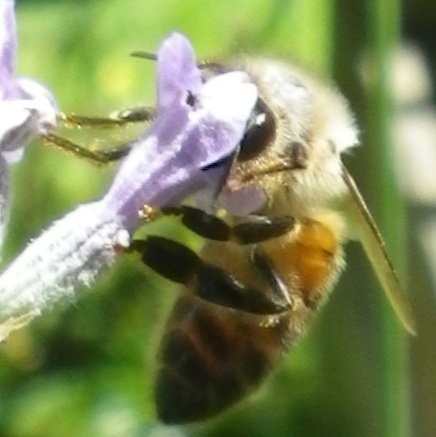
The bees continue to do well here and are bringing in lots of pollen.  The city bees abandoned my lavender for Echinacea while we were away.  I spotted 5 different bee varieties on the Echinacea and Pholx in just a couple of minutes.   The bees are happy.  We are happy.   Life is good!


Bees on Echinacea, July 2016


Sunday, June 26, 2016

Enjoying the rain

Rainy afternoon at the farm.
Many years ago, a friend from Seattle came to visit while South Carolina was in the middle of a drought.  We went out to Congaree Swamp and got caught in a downpour, and he simply could not understand my ecstatic dance as the rain cooled the 100 degree day and provided much needed water to our state.  It continued to pour for hours, the parking  lot at the baseball park flooded, and still I was happy.  Now, I would also not have understood when I lived in Germany or England, but, like Seattle, rain is more common in both of those places than sunshine, which is what makes all the scenic photos and postcards so lush and green!  

The area of Georgia where our farm is located has been edging into a drought, and working on weed-eating and finishing the water lines has been hot, sweaty work the past few days.   The good thing is that the fig trees and Goldenrain trees are hanging in there, presumably pushing their roots down into the Georgia clay, which will help them in the long run.    Still, the daylilies are a little brown and two of the Goldenraintrees were a little
The "redneck living room"
droopy, but this afternoon it started to rain.   We bought a bench and a beach umbrella a couple of days ago, and when the rain started we sat in what I have dubbed the redneck living room and listened to the rain fall in our woods and on the umbrella.  We stayed there until the rain soaked through our jeans and just enjoyed the sounds of the rain and the birds.   Once our jeans were so wet that we couldn't bend our legs, we decided to head back to the RV where we have continued to listen to the rain for the past 4 hours.

One other thing I noticed today is that the soil around the figs was still damp this morning from the water I put on them yesterday.   That made schlepping a watering can and milk jug of water 300 or so yards worthwhile!   We're used to dealing with South Carolina sand that feels bone dry an hour after the sprinklers run.   It's no wonder that the daylilies here look better than the ones in Columbia that get watered 3 times a week.

There is more rain forecast for the next few days, and I am still thankful after seeing the corn and the hay fields so very dry around here.   I'm enjoying reading The Lords of Discipline by Pat Conroy again and we both needed a relaxing afternoon.   Now, if it rains for two weeks straight again, like it did over winter break, I'll be back to complaining, but for now the sound of rain is a good thing.

Wednesday, June 22, 2016

Delays, delays, and more delays!

Bee on lavender, June 2016
Last week we spent two days at the farm, went to workshops, and returned home for dental appointments.  We had planned to head back to the farm yesterday, but that didn't work out.   We intended to check the bees in the out yards on Saturday, and are just getting around to doing so today.  It's been a busy weekend and week.

The good news is that I was able to get the bones of the website coded and uploaded.  It took me a while to get back into writing HTML, but that part of my brain finally kicked back into gear and I'm happy with the design.  I have used CoffeeCup Software for web design for at least 15 years, but this was my first time using their Responsive Site Designer to create a template which I then edited through the HTML editor.   If I decide to start creating websites for other people again, I will probably buy and spend the time learning to use the site designer, but for now it was less of a learning (relearning) curve to just do things the old-fashioned way!   I've also really enjoyed taking and editing photographs to use on the site.    We still have to take inventory and then decide on pricing for items, but updating that won't take me long at all.  The deciding is going to be what sucks all the time out of the days ahead!


Brushy Mountain English Hive
We used one of the website pictures for our business cards so that the site and the cards have similar themes.   We realized that we needed to get cards when we met many great people at the workshops last week.  The business card picture features the English Hive that hubby won at the Bee Institute -- we set it up next to one of our Adirondack chairs  and I love sitting there watching the bees fly in and out.

Hubby also cut wood and built hive boxes, covers, and bottom boards, which I then painted.  I do have to wonder about his math sometimes as I'm sure he told me there were 10 covers to paint.  I stopped counting at 13.....   Maybe he didn't think I'd go outside to start painting if I knew the real scope of the project.  (He's probably right -- it was HOT out there!)

Now we just have to replace the rusted-out bolts from a toilet tank, check the other toilets to see how close they are to springing leaks, vacuum seal and freeze the whiskey-honey ribs I cooked yesterday , and then maybe take a nap before deciding when to leave the big city for the peace and quiet of the country.   Not being on the farm has been frustrating, but the days in the city have been productive and satisfying. 

Friday, June 17, 2016

AgAware/Agsouth

Bee on lavender, June 2016
The school year is over, JROTC camp is over, hubby is on vacation, and we are very much looking forward to waking up on our own land.   We still have water and septic lines to finish up and bees to move, but when a friend told us about a couple of workshops this week, we felt attending them was well worth delaying other projects, and we were right.

Yesterday we attended the Team Agriculture Georgia (TAG) Workshop for Small, Beginning, and Limited Resource Farmers.   We learned a lot about the resources (financial and other) available to us.  Even though hubby's degrees are in business, farming is a different kind of business than the ones he studied in school.  AgSouth offers many courses at no cost to farmers, some of which help you qualify for FSA loans.  I have four typed pages of notes just about creating a business plan.   One of the things that stood out to me from the AgSouth presentation is that we need to move our mindset away from bee-keeping as a hobby and toward bee-keeping as a business.   While I've thought of it as a business, the presentation made me realize that I was actually still mentally in hobby mode.   Our conversations since yesterday have been productive.   Something as simple as setting a goal that is specific, measurable, attainable, rewarding, and timed  (a SMART goal) instead of having a general goal of wanting "more" bees and honey has made me think deeply.

The afternoon session we attended informed us about USDA programs available.   The Natural Resources Conservation Service is there to help private landowners make good conservation decision, and they will come to your farm to make suggestions about all kinds of things.  One of the things mentioned was "herbaceous weed control" and we're wondering if they'd have suggestions as to how to get rid of the blackberries and those spiny vines!

The first session we attended was about honey bees and other pollinators.  While we already knew much of what was discussed, we did pick up some good additional information and it stroked our egos to realize how much we do know!   We also got some ideas about services we can possibly offer to farmers and beginning bee-keepers in our area.

Today we attended an AgAware Marketing Seminar that was replete with information and resulted in another 4 pages of typed notes in addition to hubby's notes.   When he finally makes it home through the wind, and the rain, and the downed trees, and downed power lines (it's been a long, interesting trip home for him), we'll combine notes and discuss which of the many things we want to research from both days to prioritize.

If anyone is interested, I'd be glad to share my notes, but I strongly recommend attending workshops like these, especially if you are just getting started, or even just thinking about, building an agriculture business of any size.   We learned so much and we are so excited to refine our business plan.

Other news that I still need to blog about:  we harvested our first honey, we waterproofed the RV roof, we dug trenches for water lines, and we drank from our well.  It's been an exciting few weeks!  My brain has been rebelling against putting anything into complete sentences or proof-reading, but I'm ready to start writing again now.

Monday, May 30, 2016

Making progress.

It's only been a year since we first started talking about looking for retirement land close to my brother-in-law (BIL) instead of close to Bryson City, NC.   We really enjoyed last Memorial Day with BIL and family and the peace and quiet of being on his land. 

Digging trenches for water lines, May 2016
Since then, we've found land that we absolutely love, refurbished an RV that will be our first home on that land, met the best neighbor's in the world, had our trees thinned, a driveway constructed, electricity brought in, and a well dug.  We made good progress on water and septic lines this weekend, and are looking forward to moving the RV to the land by the middle of June.  Then we'll be able to sit in front of our mini-home first thing in the morning and last thing at night and plan where to build the house.

Our first hives are thriving in the woods, and most of our plants are doing well.  Some of my fig cuttings are struggling, and the blueberries never even pushed out the first leaf, but one of the large figs a friend gave us has two baby figs on it.   It has a long way to go to catch up with the fig in our back yard, but we hadn't expected to see fruit this year at all.  Even though the other fig tree doesn't have any fruit yet, I'm very pleased with the way it looks.  By the time we retire, I'm convinced I'll have more than enough figs on those trees to make all the jam I want or need. The two magnolias I planted are thriving.   Three of the daylillies are blooming and the others are doing well, especially considering that they are having to survive without the benefit of an irrigation system!   The gardenias that we planted by the gate are greening up, but there hasn't been much new growth on them since we planted them at Thanksgiving.

Now that the pine trees have been thinned, we are seeing quite a few tulip poplars popping up.  They are a good source of nutrition for the bees, so we're excited to see them.  Of course, the briars are also thriving in all the additional light, but I took care of all the ones between the deck and the bee hives with the weed-eater yesterday!   That trail is too uneven to bush-hog, but I don't mind using the weed-eater as I can cut around any ferns I spot.   The way I feel today, the weed-eater is also going to help me build muscles!

We have another week of school, then hubby has a week of JROTC camp, but after that we'll be able to work our land every weekend until August.   We'll move bees down Thursday evenings after hubby gets off work and maybe even move some of our trees down once we see which areas stay moist even when it doesn't rain.  This weekend was hard work, but so very rewarding.   Our retirement dream becomes more real with every trip.

Saturday, May 7, 2016

Bees 'n Trees

Honeycomb inside the tree
Our mantra on those stressful days that everyone, regardless of career field, has is "Bees and Trees."  It helps remind us that the time is approaching when our schedule will be governed more by the seasons and sunsets and less by bells and deadlines.  However, today "Bees 'n Trees" refers to bees IN trees.

We were asked to try to save a hive inside a hollowed out tree that had been struck by lightening years ago.   Pest control companies have exterminated colonies a few times in the past, but bees keep finding this fantastic place to live and moving back in again. 

Removing the small tree.
Two trees have actually merged at the base and it is at this split that the bees were entering.  We couldn't see inside the split because another tree had grown up, leaving just enough room for bees to enter.  After removing that tree and widening the hole a little, we were able to take the above picture of the beautiful comb hanging down from somewhere....   Hubby widened the hole again, and we could see and reach more.  The hollow part of the tree -- and the hive -- extends into at least two chambers with somewhat rotten wood between them.  At this point, bees were exiting from a variety of small holes around the tree -- some of which were at waist height.  We have no idea how far up the tree this hive extends.  He pulled out some of the most beautiful comb I have seen.  Still, even after cutting as much as we felt was safe, we were unable to reach any comb with brood, although we did gather enough comb with empty cells or honey to fill two large and two medium frames.    We put those frames in a Nuc and left it at the hive entrance in hopes of attracting, and thereby saving, some of the bees.
The first look inside.

As the tree is split and each side has a wide crown, it's just not possible for us to safely retrieve these bees.  The property owner may opt to have the trees cut down by an arborist.  If that is the route she takes, we will try to save the bees at that time.  It is such a friendly and productive hive; we would hate to see such good genetic stock removed from the gene pool (never mind that we simply like the critters!). But they are in town close to a playground,  and no-one wants to see children stung.


Wednesday, May 4, 2016

Drivin' On....

We were down at the farm last weekend and we got to drive on our brand new driveway!   It has made such a difference; I barely recognized that part of the land.   Not only do we have gravel to stop us from sinking into the mud, the bulldozer operator put in drainage channels and built up a berm along the edge of the deck to protect the driveway and the future garden area from erosion.  He also leveled pads for our garden shed and RV.

Down at the house site, he cleared away most of the debris from the tree thinning, leveled the site, and sloped the septic field.   We can't even begin to say how happy we are with the work.  

As if those weren't enough pleasant surprises, our neighbor cut the grass along the road for us, our magnolia seedlings appear to like Georgia clay better than South Carolina sand, the daylillies have buds, and the fig trees are full of deep-green leaves.  We threw out wild-flower seeds as we walked around and hope they grow into nectar sources for our bees.

Talking of bees, an article from Catch the Buzz may help explain why our bees often ignore what I plant for them and go find their own food sources.  The bees know what the hive needs, just like sometimes my body demands a steak instead of tofu!   In order to provide the bees variety at the house, I've planted more wild-flower seeds  and have many other seeds started that the University of Georgia recommends for year round nectar sources.    Another source recommended Clethra, a plant that blooms profusely in July-August when there is not much available for bees.  I bought two plants through Amazon that shipped from Hirt's Gardens.  The plants arrived April 11 and the white one is close to flowering already.   The plants were so healthy and so well packaged that I know I will buy from Hirt's again.  While I know that what I've planted will not be enough to support our hives, it's a start and many of the plants will spread through their roots or by self-seeding.   Every little bit that keeps them healthy and reduces the amount of sugar water we need to provide to get them through the dearth will help. 

We took two of our hives down to the farm and got them settled in.  They were not at all happy after the long trip on Friday and stung hubby through his bee jacket, but were calm by Sunday.   We'll take the next set of hives down as soon as we can close them up at night so the bees don't have to wait to go forage or travel while the sun is up and keeping them too warm.

Now we just have to drive on through the final, crazy weeks of school.   Working our hives, putting together more hive bodies and frames, gardening, and constantly changing our minds about house plans -- all those things are keeping us in positive frames of mind.  Summer is coming, and we are one year closer to retirement!   We'll be able to move the RV to the land during summer break and then start building a workshop, or a garden shed, or a house.... those plans change daily too!